
What Exactly Is Shea Butter, and Why You Need It
Everything you need to know about one of nature’s most useful ingredients for the face, body and hair.

Shea butter truly is one of nature’s little miracles. If you could keep only one natural product for your face, body and hair, a tub of good shea butter would be difficult to beat.
It can soften dry elbows, protect hardworking hands, nourish natural hair, condition rough heels, comfort dry skin and form the heart of everything from body butter and lip balm to handmade soap and lotion.
We have worked with shea butter for years—first in our own handmade products and later as direct importers from Ghana. This guide shares not only what shea butter is, but why freshness, sourcing and the way it is produced make such a difference.
A product we genuinely believe in
Why Shea Butter Has Stayed in Our Cupboard
Long before Isivuno Naturals began importing shea butter, it was already one of the ingredients we reached for most often at O’live Handmade Soaps. We used it in soaps, creams, body butters and balms because it was reliable, versatile and gentle enough for everyday family use.
What started as a search for an ingredient we could trust eventually took us to northern Ghana, where we saw the skill and hard work behind every batch. That journey changed the way we understood shea butter. It is not simply another fashionable cosmetic ingredient. It is the result of a long traditional process, and for many of the women who produce it, an important source of income.
Fresh shea butter should have a naturally earthy, nutty character. It should feel rich, soften against warm skin and smell clean—not stale or like old cooking oil. Those details matter whether you are using one small tub at home or buying in bulk for a business.

What Is Shea Butter?
Shea butter is a natural fat extracted from the kernels inside the nuts of the shea tree (Vitellaria paradoxa), which grows naturally across the savannah regions of West Africa.
At room temperature it is usually firm, but it softens quickly against warm skin. That melt-on-contact quality is one of the reasons it works so beautifully as a simple moisturiser and as an ingredient in cosmetic formulations.
Unlike a thin body oil, shea butter brings richness and structure. A small amount spreads a long way, making it useful on its own or blended with oils, waxes, emulsifiers and other butters.
The Journey of Shea Butter
- Fruit is collected: Ripe shea fruit is gathered by hand.
- Nuts are prepared: The fruit is removed and the nuts are dried before the kernels are taken out.
- Kernels are roasted: Roasting develops the characteristic natural aroma and prepares the kernels for grinding.
- A paste is made: The roasted kernels are crushed and ground.
- The butter is separated: The paste is mixed, kneaded and washed until the natural fat separates.
- It is filtered and cooled: The liquid butter is filtered, stirred and allowed to set.
Where Does It Come From?
The shea tree grows in countries including Ghana, Burkina Faso, Côte d’Ivoire, Mali and Nigeria. It is deeply connected to the communities living across this region.
At Isivuno Naturals, our unrefined shea butter is sourced directly from a women’s co-operative in northern Ghana. Working directly with the producers gives us greater visibility into the raw material, traditional production and handling of each shipment.
For us, quality starts at the source. Traceability is not simply a marketing phrase—it is knowing who made the butter, where it came from and how it reached our customers in South Africa.

Traditional shea butter production has been passed down through generations across West Africa.
It Works Beautifully in DIY Skincare
Shea butter is a staple in a formulator’s cupboard because it can stand proudly on its own or work as a dependable sidekick to other oils and butters.
- Body butters
- Lip balms
- Lotion bars
- Face and body balms
- Hair masks
- Sugar scrubs
- Cold-process soap
- Creams and lotions
Use it in anhydrous products such as balms and body butters, or incorporate it into properly formulated water-based creams and lotions. A little goes a long way.


One Tub, So Many Uses
Shea butter has remained popular because it solves a very ordinary problem beautifully: dry skin and hair need lasting nourishment, not just something that disappears a few minutes after application.
- For the face — Warm a very small amount between clean fingertips and press it onto dry areas. People with acne-prone or sensitive skin should patch test first.
- For the body — Apply after bathing while the skin is still slightly damp to help seal in moisture.
- For hands and feet — Massage it into rough hands, cracked heels, elbows and knees, especially before bed.
- For lips — A tiny amount works as a simple balm when lips feel dry or exposed to cold weather.
- For natural hair — Use sparingly to soften dry ends, smooth frizz and help seal moisture into curls and coils.
- For children and families — Its simplicity makes it a popular household staple, although every new product should still be patch tested.
- For makers and brands — It brings body, emollience and a rich skin feel to soaps, balms, butters, creams and haircare products.
Yellow vs Ivory Shea Butter
Both yellow and ivory shea butter are natural, unrefined products. Yellow shea butter is traditionally coloured with borututu root, while ivory shea butter retains its natural cream-to-ivory colour. Neither is automatically better—the right choice depends on your preference and finished product.
Read the Yellow vs Ivory guideRaw vs Refined Shea Butter
Unrefined shea butter keeps its natural scent, colour and character. Refined shea butter is processed to create a lighter, more neutral ingredient. That neutrality can be useful when a formulation needs less aroma or a more uniform appearance.
Compare refined and unrefinedHow to Use Shea Butter
Start small. Warm a little between your fingers before applying it directly, or weigh it accurately when formulating. Store it tightly closed in a cool, dry place away from direct sunlight. Natural changes in firmness during hot and cold weather are normal.
Explore everyday shea butter usesFind the right option
How to Shop Shea Butter
There is no single “best” shea butter for everyone. Think about how you plan to use it, whether you prefer a natural aroma and colour, and whether you are buying for yourself, formulating in bulk or building a brand.

Ivory Unrefined Shea Butter
Our classic Grade A unrefined shea butter has a natural cream-to-ivory colour and the earthy, nutty aroma expected from traditionally produced shea butter.
Best for: direct skin and hair use, soapmaking, body butters, balms, lotions and general formulation.
Shop Ivory Shea Butter
Yellow Unrefined Shea Butter
Made from the same premium shea kernels as our ivory butter, with borututu root added during traditional production to create its distinctive golden-yellow colour.
Best for: traditional skincare, rich body butters, haircare, soapmaking and customers who prefer its warm colour.
Shop Yellow Shea Butter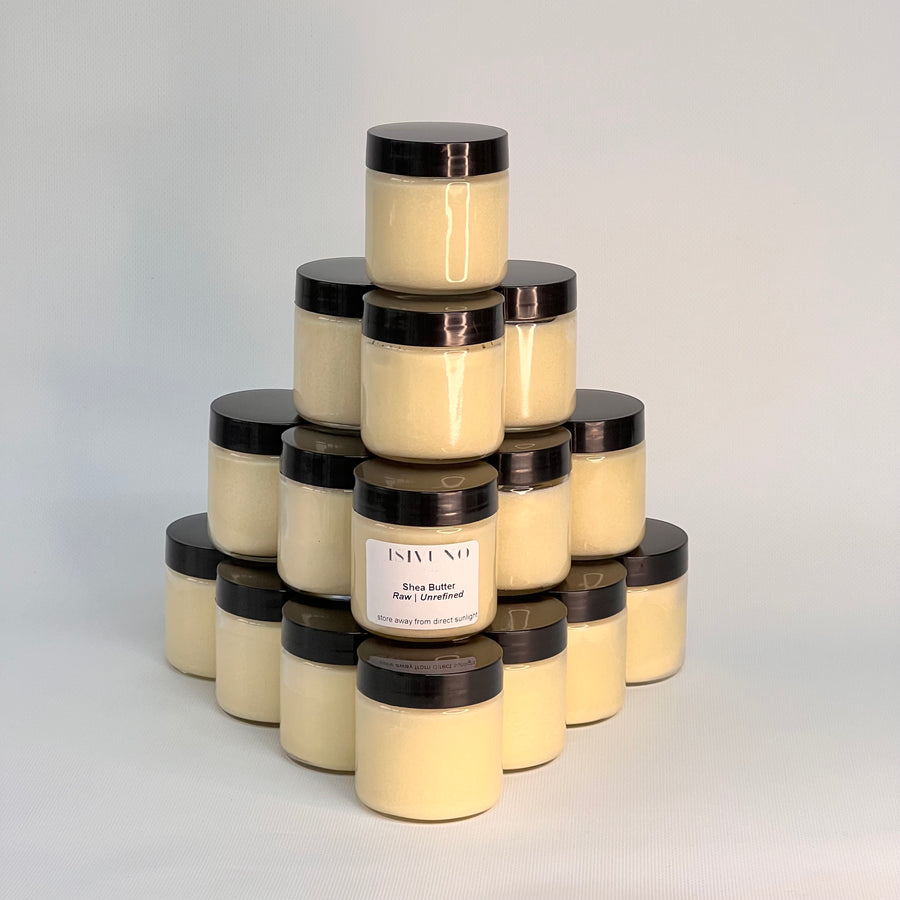
Private Label Shea Butter
Start or grow your own brand without manufacturing from scratch. Our ready-to-label jars are filled with Grade A unrefined shea butter and professionally packed for resale.
Best for: salons, spas, gift shops, online stores, skincare brands and entrepreneurs wanting a simple product that is ready to brand.
Explore Private LabelWhat customers say
Read Verified Shea Butter Reviews
Rather than inventing testimonials, we have linked directly to the live product pages where customers have shared their own experiences with our shea butter and private-label products.
See current reviews from customers buying our Grade A ivory shea butter for personal use, making and business supply.
Read product reviews →Read customer feedback on our lighter, more neutral shea butter for cosmetic formulation and everyday use.
Read product reviews →See feedback from businesses using our ready-to-label shea butter jars to start or grow their own product ranges.
View private-label reviews →Still have questions?
Visit the Shea Butter FAQ
Find practical answers about using, storing and melting shea butter, natural graininess, scent and colour variations, soapmaking, sourcing and wholesale orders.
Open the FAQKeep learning
Explore the Resource Centre
Our Shea Butter Resource Centre brings together guides on choosing, using, storing, formulating with and buying shea butter, all in one place.
Visit the Resource CentreRecommended reading
Continue Your Shea Butter Journey
These guides take you deeper into the questions customers, makers and formulators ask us most often.

Yellow vs Ivory Shea Butter
Understand the colour, production and practical differences before choosing.
Read the guide →
Refined vs Unrefined
Compare natural aroma, colour, processing and formulation uses.
Read the comparison →How to Formulate with Shea Butter
A practical beginner’s guide to weighing, melting and using shea butter correctly.
Read the guide →
How Shea Butter Is Made
Follow the traditional journey from harvested shea fruit to finished butter.
See the process →